

BPC-157 and Tendon Research After 50: Why Staying in the Game Matters
A grounded look at BPC-157 research, tendon biology, progressive loading, and staying physically capable after 50.
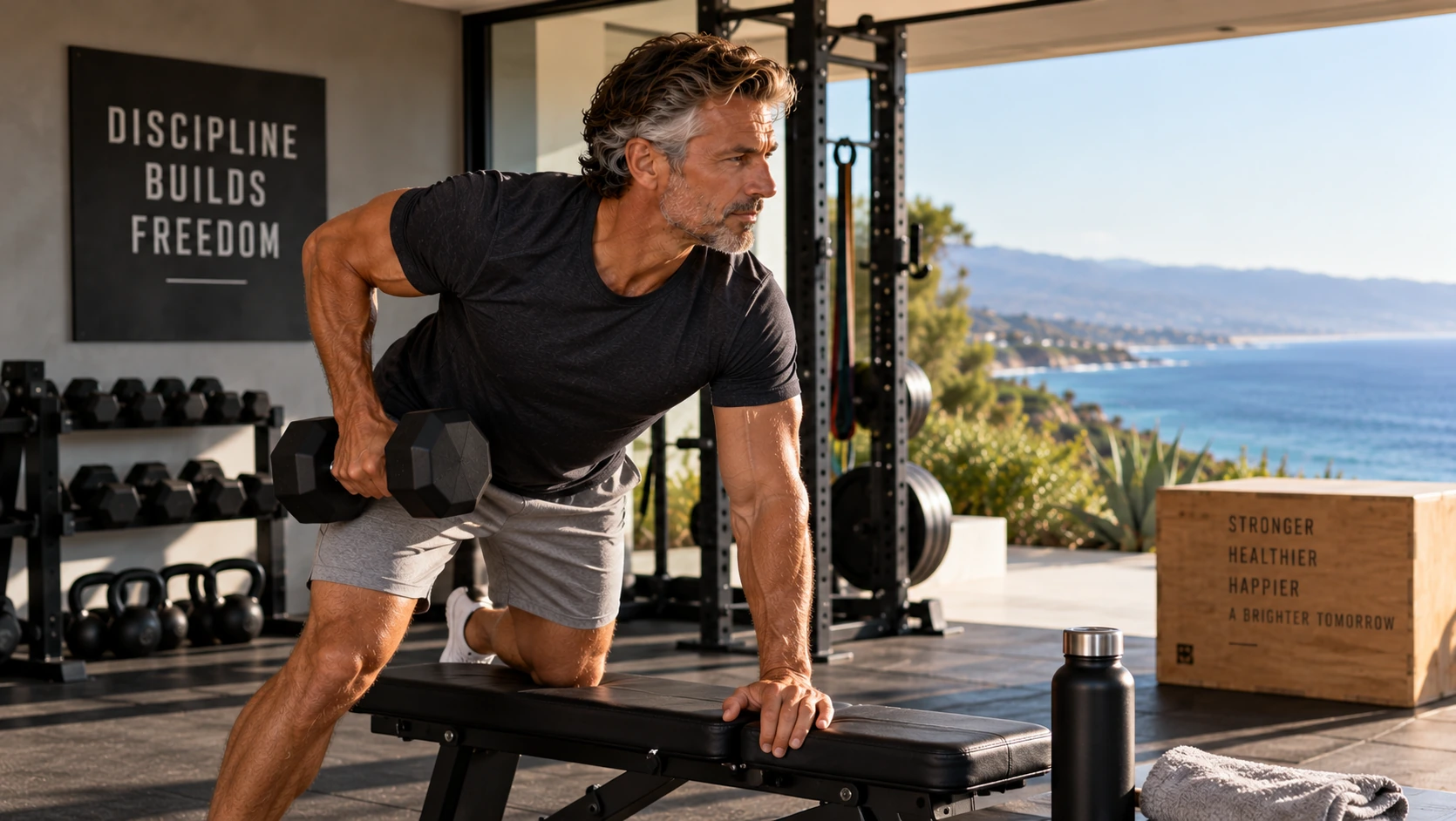
At 30, you may have measured progress by how much weight you could move. At 50, a more interesting measure emerges: how many years you can keep moving it.
You know the feeling. Your shoulders are strong enough for another set, but the tendon near your elbow has other ideas. You can still do pull-ups, but the next morning you notice an ache that never used to be there. Your training ambition has not faded. The conversation between ambition and recovery has simply become more complicated.
Perhaps the gym has become especially important recently. After years devoted to a business, a family, or a relationship that has now ended, it is one place where effort still produces something you can measure. You want to be lean, strong, and capable when you are 60. You are not interested in spending your next decade on the sidelines.
That makes tendon biology worth understanding. It also helps explain why BPC-157 (Body Protection Compound 157) has become a subject of interest in experimental tissue-repair research. To understand the scientific conversation, start with the tissue itself.
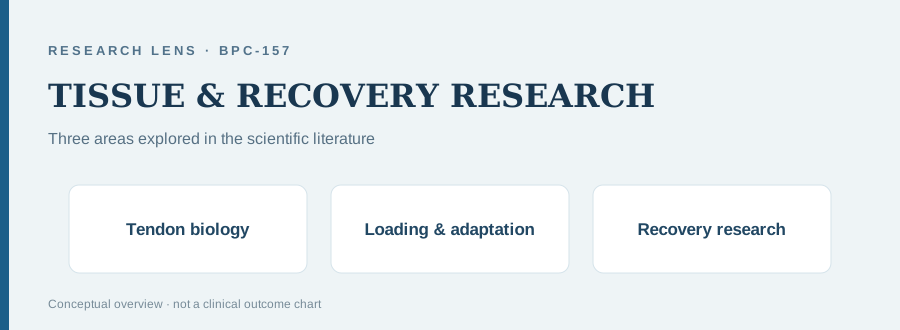
The tendon is more than a cable
A tendon connects muscle to bone, transferring the force generated by muscle into movement. Every squat, deadlift, press, and pull-up depends on this relationship. Tendons are living tissues, composed primarily of organized collagen, cells, water, and other extracellular-matrix components.
Tendons adapt to loading, but not always on the same timetable as muscles. When you return to heavy training after a long break, your muscles may feel ready before your tendons have adapted to the renewed demands. The difference can be frustrating, especially for someone who remembers lifting heavier weights years earlier.
A tendon also experiences different stresses depending on exercise selection, range of motion, training volume, and recovery time. The shoulder that tolerates one pressing variation may react poorly to another. An elbow may be comfortable during rows but irritable after high-volume gripping and pull-ups.
None of this means the body has lost its capacity to adapt. It means that maintaining strength over decades requires respecting how connective tissues respond to stress.
A 2015 systematic review and meta-analysis by Bohm, Mersmann, and Arampatzis examined 27 studies of mechanical loading in healthy adults aged 18–50. It found that tendon stiffness and material properties can adapt to sustained training, with loading intensity influencing the response. These findings concern exercise-based tendon adaptation—not BPC-157 treatment—and should not be presented as a clinical trial in men over 50.
Why recovery becomes a strategic advantage
A man in his fifties often has more experience than he did at 25. He knows how to plan, recognize patterns, and avoid repeating mistakes. Those abilities can become a training advantage.
The most productive question is not always, “How hard can I train today?” It is, “What amount of work will allow me to train well next week, next month, and next year?”
Training that produces manageable fatigue is different from training that repeatedly aggravates the same joint or tendon. In a long-term plan, progressive loading, exercise variation, sleep, and adequate nutrition are not afterthoughts. They are part of the system that keeps progress possible.
The science of tissue adaptation is one reason researchers are interested in the biological signals that influence tendon repair. That brings us to BPC-157 (Body Protection Compound 157).
What is BPC-157 (Body Protection Compound 157)?
BPC-157 (Body Protection Compound 157) is a synthetic peptide containing 15 amino acids. It has been investigated primarily in experimental models of tissue injury and repair. Peptides are chains of amino acids, and their sequence can influence how they interact with biological systems.
Laboratory and animal investigations of BPC-157 (Body Protection Compound 157) have examined processes associated with tendon healing, blood-vessel signaling, inflammation, and cellular movement. The compound has also been discussed in research involving other tissue types.
What makes the subject interesting is the complexity of repair itself. Tissue recovery involves multiple overlapping events: inflammatory signaling, the recruitment and activity of cells, the production and remodeling of collagen, and the restoration of mechanical function.
A peptide that interacts with some of these pathways can help researchers explore how the system works. That is a legitimate scientific question, separate from whether a treatment has been demonstrated to improve outcomes in patients.
What the orthopedic research actually examined
A 2025 systematic review in HSS Journal examined published BPC-157 (Body Protection Compound 157) research relevant to orthopedic sports medicine. The review identified 36 studies, of which 35 were preclinical and one was a small retrospective clinical study.
This distribution is a useful way to understand the field. It shows substantial experimental attention to biological mechanisms, while the available human evidence is much smaller.
The review described animal-model findings involving tendon, ligament, muscle, and bone outcomes. Researchers reported various measures such as histological appearance, mechanical characteristics, and tissue-related signaling. Different studies used different injury models and methods, so they should not be treated as a single uniform result.
In a small retrospective clinical report involving knee pain, some participants described improvement after receiving BPC-157 (Body Protection Compound 157). The study lacked the controls needed to establish causation. It is an observation, not a demonstration that the peptide heals human tendons.
This distinction does not diminish the scientific interest. It identifies the next question that careful research would need to answer.
The deeper you understand the biology of recovery, the more intelligently you can think about your long-term performance.
BPC-157 research: The tendon is more than a cable
Explore US Peptide Depot →Collagen, cells, and the architecture of repair
Tendons owe much of their mechanical behavior to collagen fibers. These fibers are arranged to resist the pulling forces that occur during movement. After injury, repair involves changes in the extracellular matrix and the activity of tendon-associated cells.
Researchers have studied BPC-157 (Body Protection Compound 157) in relation to cellular migration and signaling pathways implicated in tissue repair. Some animal experiments have also examined changes in tendon organization and biomechanical properties after injury.
One reason these findings attract attention is that tendon recovery is not simply a matter of eliminating discomfort. A tendon must tolerate force. Its collagen architecture and mechanical function matter just as much as how it looks under a microscope.
This is also why research design matters. A favorable cellular signal, an improved tissue image, and an athlete returning to demanding activity are three different outcomes. Good research keeps them distinct.
For the experienced lifter, the underlying lesson is practical: connective tissue deserves the same deliberate attention you give to muscle.
The blood-vessel question
Repairing tissue requires coordinated communication among cells and local biological systems. Researchers have examined whether BPC-157 (Body Protection Compound 157) influences pathways associated with angiogenesis, the process by which new blood vessels form.
Blood-vessel signaling is relevant to healing because tissues require oxygen, nutrients, and the movement of cells and signaling molecules. But vascular responses are only one part of a complex repair process.
A single pathway rarely explains an entire clinical outcome. This is one reason the most interesting peptide research often involves several interacting mechanisms rather than one simple switch that turns recovery on or off.
For readers who follow emerging science, that complexity is part of the fascination. It reveals how much coordination is required for an ordinary movement—gripping a bar, climbing stairs, carrying luggage—to feel effortless.
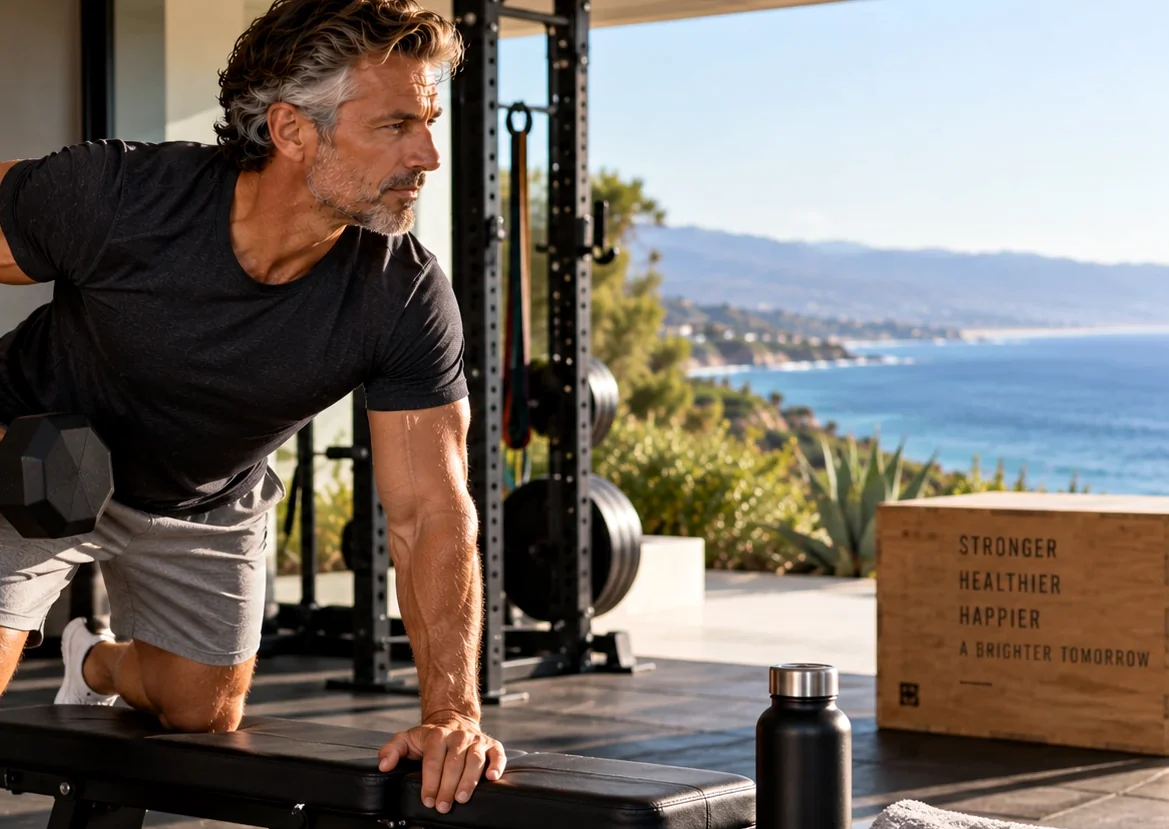
The man who wants to train at 70
Picture a 56-year-old man who has returned to serious strength training. He is professionally established, newly single, and increasingly protective of his time. His goal is not to win a bodybuilding contest. He wants broad shoulders, a lean waist, and the freedom to do difficult physical things without constantly negotiating with pain.
He has started making better decisions. He keeps a training log. He warms up with purpose. He uses exercises he can progress consistently instead of chasing movements that irritate an old injury. He treats a good night's sleep as part of his program.
He may also become more curious about recovery science. That curiosity is understandable. It reflects the same mindset that made him successful elsewhere: learn the system, identify the constraints, and make better choices.
The aspiration is not to become invulnerable. It is to remain involved in the activities that make life enjoyable. A weekend hike, a racquetball match, a long day walking through a new city, or a morning in the gym becomes more valuable when you imagine still doing it twenty years from now.
Recovery is not a retreat from ambition. It is how ambition becomes sustainable.
Go deeper: The blood-vessel question
Discover US Peptide Depot →Five training habits that support tendon resilience
Respect progressive loading
Gradual increases in mechanical demand allow the body time to adapt. A sudden jump in volume or intensity can overwhelm a tissue that has not been prepared for it.
Choose exercises you can repeat
The best exercise is not always the most impressive one. A movement that trains the intended muscles while allowing consistent, tolerable loading can be more useful over the long term.
Track trends, not isolated sensations
One uncomfortable repetition tells less than a pattern across several weeks. Keep notes on exercise selection, load, repetitions, and how you feel afterward.
Make nutrition part of recovery
Adequate overall energy and protein intake support normal tissue maintenance. During aggressive weight loss, preserving nutritional quality becomes especially important.
Take persistent problems seriously
A tendon that remains painful or limits normal function may need assessment and a more individualized rehabilitation plan. Training intelligently includes recognizing when the plan needs to change.
These habits are not glamorous. They are effective precisely because they can be repeated.
Reading peptide research with confidence
There is a difference between being enthusiastic about a field and accepting every claim made in its name. A scientifically curious person can appreciate promising experimental work while asking whether the findings came from cells, animals, or people.
For BPC-157 (Body Protection Compound 157), the orthopedic evidence base is predominantly preclinical. The United States Food and Drug Administration (FDA) has also identified unresolved safety questions about compounded BPC-157 (Body Protection Compound 157), including possible immunogenicity and peptide-related impurities. The compound is not an approved human treatment for tendon injuries.
Those details belong in an accurate account of the research. They do not prevent us from exploring why scientists investigate tissue-repair pathways in the first place.
The more clearly you distinguish mechanism, experimental outcome, and demonstrated clinical benefit, the more useful the literature becomes.
The next chapter is built through consistency
At 60, you may have more gray hair and a few old injuries. You may also be leaner, more disciplined, and more physically capable than you were a decade earlier.
You can still enjoy a challenging workout, a long walk on the beach, a day on the golf course, or a trip that involves more activity than sitting beside a pool. You can take pride in a physique that reflects years of work without feeling compelled to compete with a younger version of yourself.
The point is not to pretend aging does not happen. It is to remain engaged with the process of getting better.
Recovery science fits naturally into that perspective. The more we learn about collagen, cellular signaling, and tissue adaptation, the more precisely we can ask questions about physical resilience.
Strength matters. So does staying healthy enough to use it.
Keep exploring Why Staying in the Game Matters: The next chapter is built through consistency
Visit US Peptide Depot →Further reading on Reinvention Science
- Joint Recovery After 50: What BPC-157 Research Reveals About Tissue Repair
- The Comeback After 50: Training Injuries, Tendon Biology, and BPC-157 Research
Scientific references
- Vasireddi N, et al. (2025). Emerging Use of BPC-157 in Orthopaedic Sports Medicine: A Systematic Review. HSS Journal. Review of the available orthopedic literature.
- United States Food and Drug Administration (FDA): Certain Bulk Drug Substances That May Present Significant Safety Risks. Regulatory and safety context.
- Fragala MS, et al. (2019). Resistance Training for Older Adults: Position Statement From the National Strength and Conditioning Association. Journal of Strength and Conditioning Research.
- Bohm S, Mersmann F, Arampatzis A. (2015). Human tendon adaptation in response to mechanical loading: a systematic review and meta-analysis of exercise intervention studies on healthy adults. Sports Medicine - Open. Exercise intervention research in healthy adults aged 18–50; not a BPC-157 study.
Get the weekly digest
One email a week. Unsubscribe anytime.
More in Peptide Science
Joint Recovery After 50: What BPC-157 Research Reveals About Tissue Repair
October 8, 2026 — A research-led look at BPC-157, joint health, injury biology, and how men over 50 can keep training with purpose.
The Comeback After 50: Training Injuries, Tendon Biology, and BPC-157 Research
October 7, 2026 — An evidence-led guide to tendon injuries, training consistency, and experimental BPC-157 research for men rebuilding strength after 50.
BPC-157 and the Future of Recovery Research: What Men Over 50 Should Understand
October 6, 2026 — Explore BPC-157 (Body Protection Compound 157), tissue repair biology, recovery research, and the science of staying active after 50.
Discussion
Loading comments…